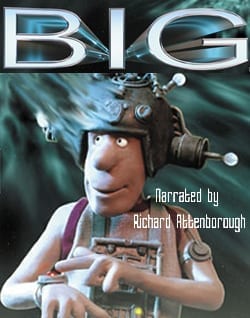
BIG has been produced to tackle the question and does so by taking the audience on an immersive journey to the far reaches of the universe that we are currently able to observe. Along the way, the audience is introduced to the concept of the speed of light, and they meet a huge range of objects to spark their imagination.
Unlike any show you have seen before, BIG combines a light-hearted storytelling style with computer animation, stop-motion character animation (clay animation), laser graphics, and a surround sound musical score to bring a really big subject down to Earth.
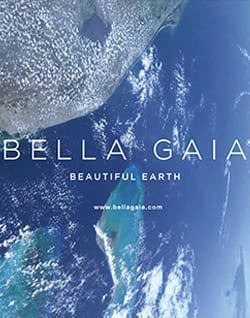
Bella Gaia (Beautiful Earth) Successfully simulates space flight, is a ‘Living Atlas’ multimedia journey of our world, and expresses the deeply moving beauty of planet Earth as seen through the eyes of astronauts.Created by award winning director and classically trained violinist Kenji Williams, and in collaboration with NASA, Bella Gaia features live performances by Williams and world music artists against a large-screen backdrop of orbiting visualizations of Earth from space.
Inspired by astronauts who spoke of the life changing power of seeing the Earth from space, award winning filmmaker and composer Kenji Williams created Bella Gaia to simulate this transformative effect called the “Overview Effect”. Working closely with NASA’s scientific visualization studio, the award winning Bella Gaia successfully simulates space flight, taking the audience on a spectacular journey around planet Earth. With gripping NASA scientific visualizations, guided by the hypnotic, ecstatic music of Kenji Williams, Bella Gaia showcases a thought-provoking stream of crucial scientific data regarding our imperiled eco-systems while also celebrating the amazing cultural heritage of humanity.
A “Living Atlas” journey of our planet, Bella Gaia creates a direct experience and connection with the creative forces of Earth. Bella Gaia uses the media-rich languages of today to present audiences compelling visualizations of scientific data, natural systems and humanity’s impact on nature in a way that taps audience’s emotional intelligence and facilitates deeper cognitive understanding of today’s complex issues.

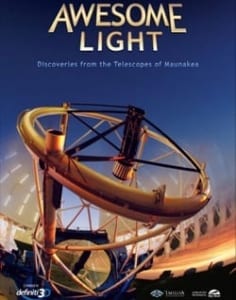
Open the doors of the world’s most famous observatories to your audiences. Produced over three years with exceptional access to the telescopes and in close cooperation with the principal investigators. Discover the latest stories from the cosmos in this unique planetarium series!
For general audiences. Features PI’s data and astronomical simulations rendered in DigitalSky 2 with stunning time-lapse footage from Maunakea.
Voyage into Subaru, Gemini, Keck, and Canada-France-Hawai‘i observatories to explore an exoplanet, supernova, stars orbiting at the center of the Milky Way, and the 1° galactic survey.
Approximate running time: 22 minutes
Witness the James Clerk Maxwell, the Submillimeter Array, Caltech Submillimeter, and Very Long Base Array observatories, to explore star-forming regions, Jupiter’s atmosphere, and stunning submillimeter views of M51 and M87.
Approximate running time: 23 minutes
Chase asteroids with NASA’s Infrared Telescope, use Britain’s UKIRT to discover hidden jewels in the Milky Way, watch supernovae with Hawai‘i’s 2.2 optical telescope, and share stories with the astronomers of tomorrow from the University of Hawai‘i.
Approximate running time: 22 minutes
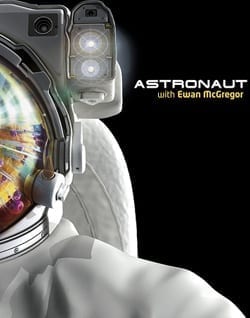
The Greatest Endeavor Ever Undertaken
The exploration of space is the greatest endeavor that humankind has ever undertaken.
What does it take to be part of this incredible journey? What does it take to become an astronaut?
Experience a rocket launch from inside the body of an astronaut. Explore the amazing worlds of inner and outer space, from floating around the International Space Station to maneuvering through microscopic regions of the human body. Discover the perils that lurk in space as we subject ‘Chad’, our test astronaut, to everything that space has to throw at him.


Alien Action is fifty minutes of thrilling excitement and stunning effects in 360°. Experience an exciting mixture of design, music, cartoon and science fiction as an artistic and ironic interpretation of the classic sci-fi theme “Invasion from space!” Pop art meets science fiction!
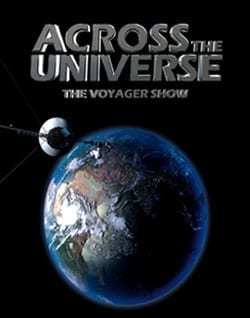
Let us take you to one of the most thrilling journeys mankind ever made. A journey like this is possible only about every 176 years. Be close to witness the complete mission of both of the Voyager Twins and explore regions mankind never saw before!
Answers to questions such as:
How does a probe work?
Why are probes built as they are?
How you can control a probe?
How does the probe find its way in space?
How was it possible to build a probe like this 30 years ago?